Facing the Music: who are we when we cannot practise our art?
Writing about music from the inside out is one of the most challenging things I’ve ever done. Words fail to capture the experience of sitting in the womb of creation where sound, silence, composer, and performer meet, communicate, and together spin a sound cathedral that invites everyone inside. I sought to do this in my own novel, The Waco Variations, and F. M. Wilson captures it beautifully in her debut novel, Facing the Music.
From the sweeping beauty of music to the sweeping horror of war, Fran Wilson's poetic writing invites readers into relationships forged in notes, tried in battle, and the very real joys and challenges of being concert musicians. We're invited into the disciplined, relentless hours of practicing, into the joys and terrors of performing, and most eloquently into the communication between performers that can only happen in notes.
I’ve been a fan of Wilson’s writing for years through her popular blog, The Cross-Eyed Pianist, and I’m honored to feature her here on No Dead Guys.
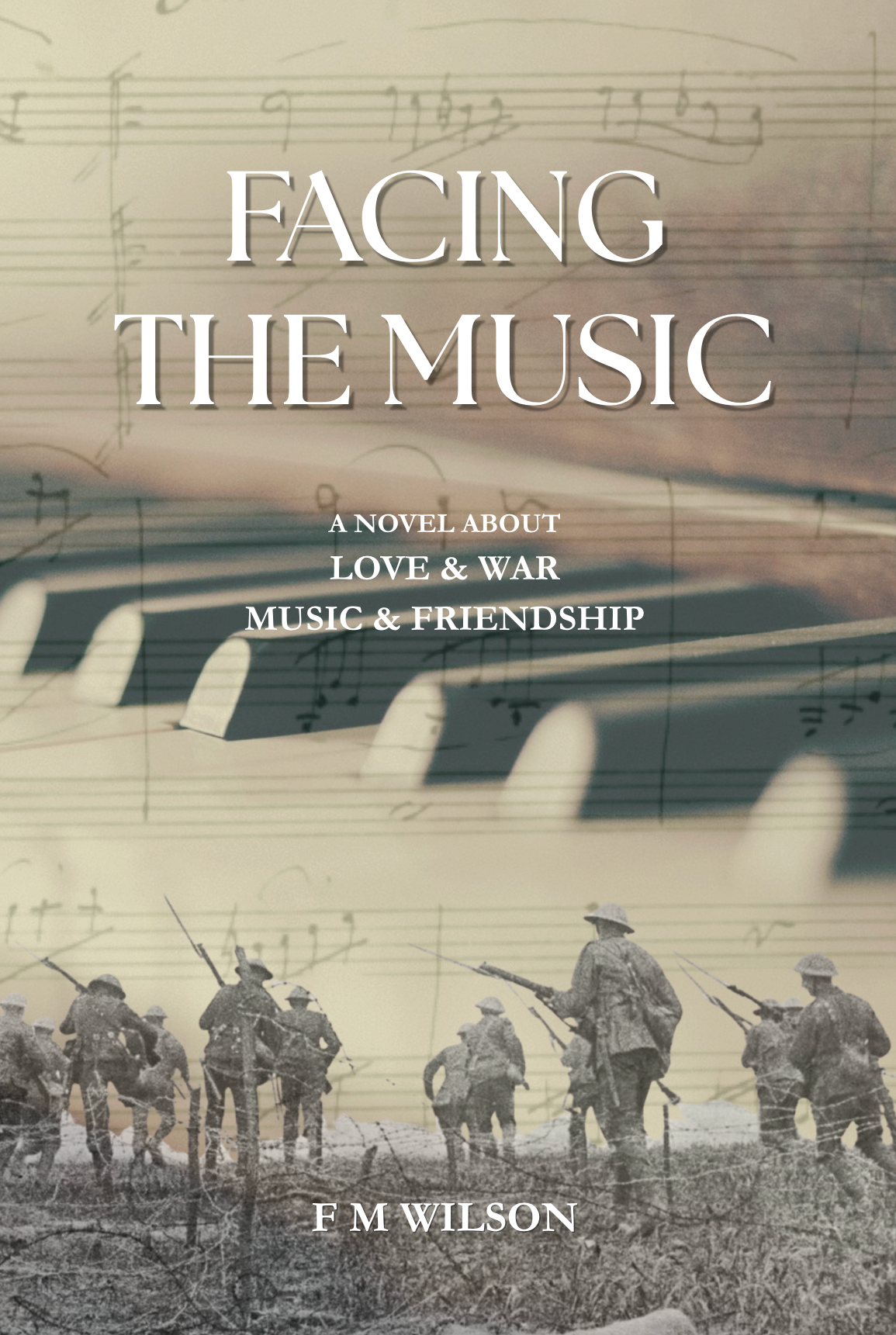
Facing the Music: who are we when we cannot practise our art? by Frances Wilson
For many artists, being an artist is not merely a profession. It is an essential part of their identity. A musician does not necessarily stop thinking of themselves as a musician when they leave the concert platform; a painter remains a painter even when away from the studio; a writer may continue to inhabit an imaginative world even when not actively writing. Artistic identity can become so deeply embedded in our sense of self that it is difficult to separate what we do from who we are.
But what happens when circumstances prevent us from doing it? It raises a surprisingly profound question: What does it mean to be an artist when the circumstances that allow you to practise your art are suddenly taken away?
This question lies at the heart of my debut novel Facing the Music, which follows the fortunes of two ambitious, gifted young musicians, pianist Theo Browne and violinist Jonathan Lane-Fox, who are poised on the cusp of remarkable professional success during the summer of 1914.
At the beginning of the novel, Theo Browne’s sense of identity is absolute: he is a pianist. Years of study with his beloved teacher, Mr Hines, hours of disciplined practice, and his musical partnership with violinist Jonathan Lane-Fox have all been directed towards a professional career. Following a triumphant London debut in August 1914, that future appears assured.
The First World War removes Theo and Jonathan from the world where their artistic identities have been formed. Concert halls, rehearsals and lessons give way to military service as they are plunged into the brutal reality of the Western Front, where friendship, courage and compassion are tested beyond endurance. Both men are changed in ways neither could have imagined.
Yet they do not cease to be musicians simply because they are no longer performing. Music persists through memory: in remembered works, in the habits of discipline and listening learnt through years of study, and in the words of teachers whose influence has become part of their inner lives.
Although Facing the Music is set more than a century ago, my exploration of these ideas was influenced by a much more recent historical rupture: the COVID-19 pandemic.
I spoke to a number of professional musicians during the Covid lockdowns in the UK. Initially, many welcomed the break from performing and travelling, seeing it as an opportunity to practise, learn new repertoire, and rest and reset. But without the focus of concerts, spare time quickly became an affliction rather than a gratification for many, and they felt bereft without the chance to perform and share their music with live audiences. Many felt a sense of dislocation without live music, and some doubted whether they could return to concert-giving after the pandemic. For people whose lives and activities are so closely linked to their art, not being able to engage in one’s art can feel like an attack on one’s whole being.
During the lockdowns, musicians suddenly found themselves deprived of the structures through which they had always understood their professional and artistic lives. Concerts disappeared, venues closed, and collaborative music-making in its familiar form became impossible. Research with UK performing artists during the pandemic documented not only the loss of work and income but also a profound challenge to identity and sense of purpose. For some musicians, simply practising became a way of reminding themselves who they were.
Watching musicians navigate this extraordinary period made me reflect on the distinction between being a musician and working as one. If there is no audience, no concert, no engagement in the diary, are you still a performer? If circumstances prevent you from pursuing the career you had imagined, does that diminish your identity as an artist?
These questions found their way, indirectly, into Facing the Music, particularly in Theo’s story. The First World War and Covid are, of course, profoundly different historical experiences, and Facing the Music does not attempt to equate them. What interested me was the shared experience of sudden interruption: the disappearance of familiar routines and expectations, and the necessity of adapting when circumstances beyond one’s control render the expected future impossible.
For Theo, and to a lesser extent for Jonathan, music endures through memory, friendship, teaching, thought, and eventually performance. Yet Theo’s understanding of what it means to be a musician broadens. Artistic identity is no longer measured solely by prestigious engagements or professional success.
The question becomes not simply “Can I still play?” but rather “What does being a musician mean to me now?”
Facing the Music by F M Wilson is published by Nine Barrow Press and is available in paperback and eBook from Amazon.
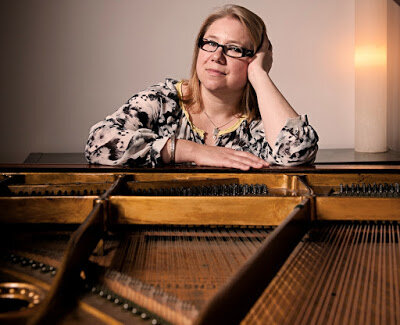
F M Wilson is a publicist, writer and pianist. She is the creator and editor of The Cross-Eyed Pianist, one of the UK’s leading websites devoted to classical music and the piano. Since founding the site in 2010, she has written extensively on music, performance and musicians for an international readership, and in 2012 she launched Meet the Artist, a series of interviews with musicians and composers. Her writing has also appeared in Pianist, Classical Music, International Piano, The Schubertian, and InterludeHK, and from 2011 to 2018, she was a concert reviewer for Bachtrack.com.
An advanced amateur pianist, F M Wilson returned to the instrument after an absence of some twenty years, gaining professional performance diplomas with distinction in her late 40s. Her lifelong love of classical music, together with her experience as a pianist and piano teacher, inspired her first novel, Facing the Music.
F M Wilson lives in Dorset with her husband and a much-loved 1913 C. Bechstein grand piano.