Music Transcends Borders: an interview with concert pianist and recording artist Emanuele Arciuli
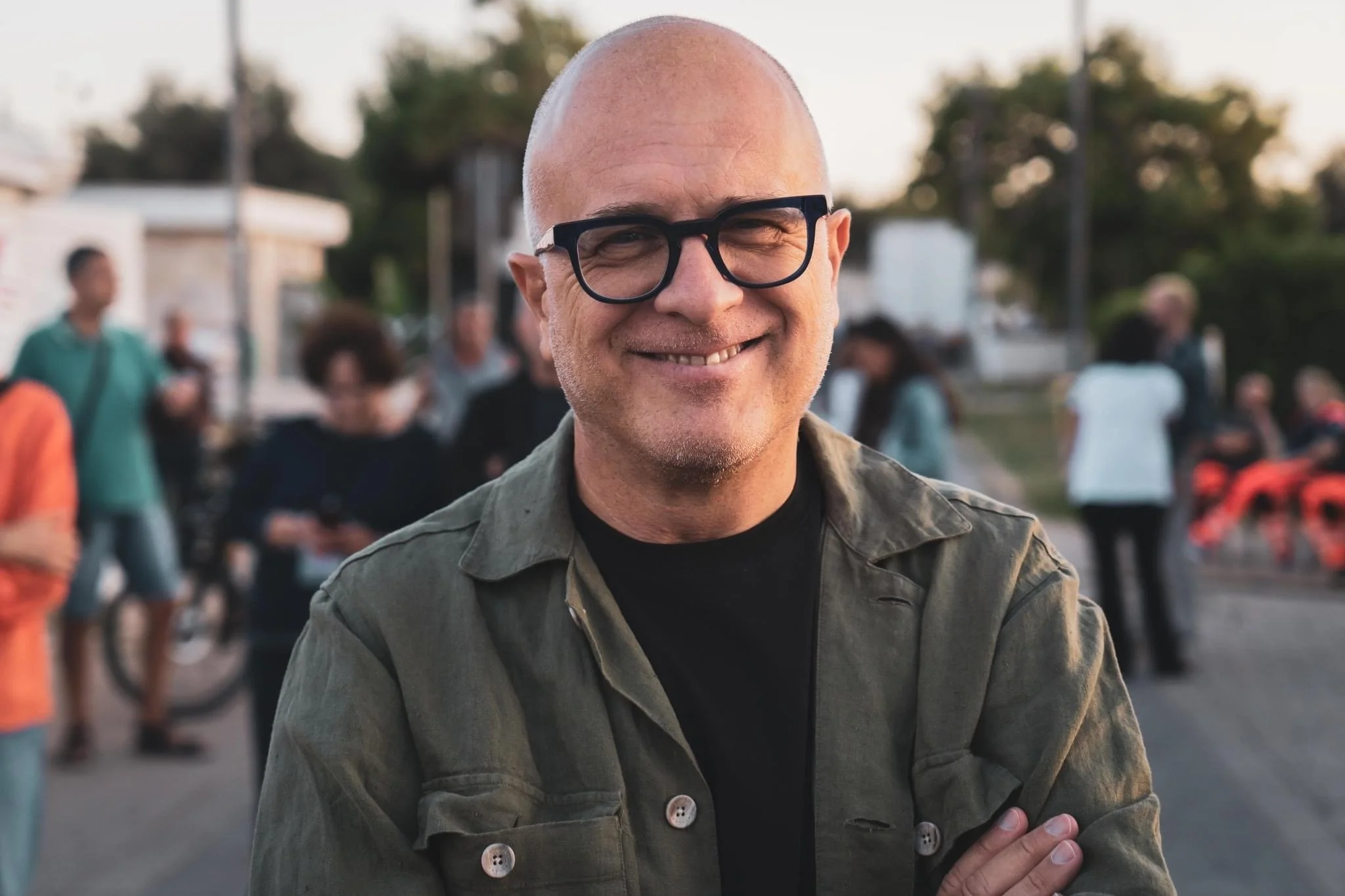
Music ignores boundaries. Whether allowing us to travel to the countries and cultures of the past, or giving us the means to participate in the current language of a place on the other side of the globe, music chooses its own citizens. When we hear it, we know it speaks our language, and when we play it, we know we’ve found a musical home.
Italian concert pianist Emanuele Arcuili’s repertoire ranges from Bach to contemporary music, but he is most known for his performances and recordings of American music. Frederic Rzewski’s piano pieces were the first American compositions he fell in love with and they led him to a vast repertoire that enchanted him with its strong sense of freedom, direct style, and range of musical genres. Eventually his passion for this music was noted by esteemed music critic and historian Joseph Horowitz who wrote, “Though not an American, Emanuele Arciuli commands the biggest, most varied American repertoire of any pianist I know, probably of any pianist ever known.”
Arcuili’s exploration of American music is ongoing. He became an enthusiastic collector and supporter of the Native American visual art he discovered on his many tours through the US and eventually, his immersion in this art world introduced him to the music of Native American composers. His Walk in Beauty recording, which featured several pieces by Indigenous composers, received glowing international reviews and a Grammy nomination. Today, Arcuili is working on a new recording project—one that will be dedicated solely to Native American piano music.
I’m a homegrown American musician who only discovered the beauty of Indigenous piano music in the past decade. I found it not by searching for it, but through the recordings of artists like Emanuele Arciuli who opened my ears to a musical home I didn’t know already surrounded me. It was natural, therefore, when composer Ron Warren told me about Arcuili and his newest recording project, that I reached out to him and asked if he’d be willing to be featured on No Dead Guys. I’m honored that he said yes.
At what age did you begin your piano training and when did you decide to make music your career?
I started playing piano at the age of 3 and discovered that I was able to play any melody or song that I heard. That was the same age that I started to read and write words. Unfortunately my parents were not experts in music, so my real training started much later, around age 10. I realized that I could make music my career by the time I was 20, but—being a non-competitive person—I avoided most of the major piano competitions (although I won a couple that I did enter) and my career started more slowly than many of my colleagues. I think that before my 30th birthday I was not really “in career”.
When were you introduced to contemporary music and what piece first attracted you to learning and performing it?
It was a self-taught experience, since my piano teacher was not very familiar with contemporary music. I started listening to Stockhausen, Boulez and Italian contemporary music, but I fell in love with it thanks to Frederic Rzewski’s piano music.
In a previous interview you were quoted as saying, “Sometimes I hear people complaining: ‘So sorry that I couldn’t meet Chopin, or Beethoven, or Brahms.’ That’s true, but nowadays we have a lot of living composers that are geniuses.” Why do you feel so many pianists avoid playing new music and what are some ways to entice them to do so?
When I was young it was very difficult to get new music—LPs, CDs, scores, etc. Today it’s incredibly easy, and very inexpensive. Paradoxically this has turned off people’s curiosity. But I have to say that in the contemporary piano course I teach at Accademia di Pinerolo, I have students coming from Italy and sometimes other countries, Serbia, Croatia, France, Denmark, Norway etc. and I’m quite optimistic for the future. Being in touch with composers is very interesting, because you can compare your point of view with theirs, and get a deeper understanding of their musical ideas.
You’ve created an international performing and recording career for yourself playing everything from Bach to contemporary music, but you’re especially known for your passion for music by American composers. As an Italian pianist, what attracts you to American music?
A strong sense of freedom, especially in music connected with other styles and languages (rock, jazz etc.), and my connection (and friendship) with many composers. It’s funny that, despite the fact that I’m Italian (and proud to be), I’m invited to play American music in the US too. Unfortunately my book about American piano music hasn’t been translated into English.
In what ways do you feel American music is distinctly different from compositions being composed in other countries?
I feel that most American piano music is different, more “direct”, immediate, but it’s difficult to tell exactly in what way, because American music is a complex galaxy with such a variety of approaches and styles.
From the compositions you commissioned for your ‘Round Midnight Variations album, to Frederic Rzewski’s fiendishly difficult “The People United Will Never Be Defeated,” your repertoire covers a vast array of composers and styles. What, in particular, do you look for in a composer when you consider commissioning a new piece?
I respect composers who are very different from each other in terms of language, style, poetics, age, and culture. I love strong personalities who become very challenging to me. Performing such a vast array of approaches is very stimulating. But, nowadays, I tend to prefer music that has a narrative vocation. I’m also very intrigued with jazzy harmonies and with “groove”. For instance I found some wonderful music, especially the piano pieces recently written for me, such as Matthew Quayle’s ‘Round Midnight Variations, Peter Gilbert’s Piano Sonata and Curt Cacioppo’s Armed and Dangerous. And a few months ago I had fun performing Kyle Gann’s 11 Nocturnes.
One of the many aspects of your career that interests me is your passion for music written by Native American composers. When did you first discover this music and what drew you to it?
I started with Native American visual art, which I collect avidly. My first painting was by a Oglala Lakota painter, Gerald Cournoyer, a great friend of mine. Them I started collecting many painters, and I can mention, amongst others, Fritz Scholder, George Longfish, Jaune Quick-to-See Smith, Neal Ambrose, Emmi Whitehorse, Dan Namingha, David Bradley, Kevin Red Star, George Morrison, Edgar Heap of Birds, Brad Kahlhamer, Nani Chacon, Joe Feddersen etc. as well controversial figures as Jimmie Durham and Randy Lee White.
Then my first meeting with Native Music happened with Louis Ballard. I played his music, he liked my performance and started to compose a Piano Concerto for me. He was an important presence in my life, even if we met just one time. At that time, he introduced me to another very gifted composer, Raven Chacon, who became the first Native to win a Pulitzer prize. Then the Indiana Concerto, which was incomplete when Ballard died (he was already sick when he started to compose that piece) was completed by his protegé Brent Michael Davids. Then other composers wrote for me—Raven Chacon, George Quincy, Dawn Avery, Barbara Assiginaak (known as Barbara Croall) etc.
I am genuinely interested in the variety of Native cultures, and I wish to do my best for Native American people.
Tell me a bit about your recording, Walk in Beauty, which features music by Native American and Anglo composers. What inspired you to create this album and how was it received when you released it in 2017?
I’m very proud of Walk in Beauty, which was selected by Innova Recordings for a Grammy nomination. It was very warmly received and reviewed in the US as well in Europe. It was created by putting together music inspired by nature in different ways and is an anthology of American music, ranging from Native American to American composers who were inspired by Native American culture as well by nature and landscape.
Native American composers create music in a wide variety of styles. Have you found any unifying underlying things in the compositions you’ve played that set Native American piano music apart from the Anglo American music you also play so well?
None really, to be honest.
I was thrilled to learn that you will be recording a new album for Neuma Records this year—one that features music by Native American composers Ron Warren, Charles Shadle, Brent Michael Davids, Connor Chee, Dawn Avery and a few others. How did you discover these composers and when will the album be released?
It’s an anthology of Native composers that I like. And it’s just the first step of a Native American Music project, an initiative I would love to develop with Neuma Records and my friend Philip Blackburn, a very interesting composer as well as an adventurous and visionary manager. The album will be recorded in 2026 and, hopefully, released in 2026-27 season. I very much like the music of the composers you’ve mentioned; they have strong characters and personalities. Warren is a flutist but his piano writing is very beautiful, Shadle is a classical, cultivated and deep composer, Brent Michael Davids is very energetic with a unique “groove”, Connor Chee – I play a lot his music – is a gifted pianist and composer, and Dawn Avery is a mature and creative musician. It’s really a great roster!
I understand that you’ll be featuring many of the pieces on your new album on upcoming tours. When and where will you be performing?
I will try to schedule my presence in the US promoting this album, but it’s not easy right now for no-residents. The visa is very expensive and it discourages many presenters from inviting foreign musicians. We don’t have this kind of issue when we invite American musicians to Europe. I hope that the situation will soon change. I’ve been in the States more than 50 times (almost 60), and I hope to continue my presence there!
What do you feel listeners and other pianists can learn about Native American culture through the compositions you perform and record?
I hope that many listeners (and, hopefully, other musicians) will be able to appreciate the talent of these composers, the variety of styles, the beauty of music, the complexity of musical thoughts. I don’t know if it will be possible to “learn” something, but I hope so.
“Though not an American, Emanuele Arciuli commands the biggest, most varied American repertoire of any pianist I know, probably of any pianist ever known.” (Joseph Horowitz)
Emanuele Arciuli has established himself as one of the most original and interesting performers on today’s classical music scene. His repertoire ranges from Bach to contemporary music, with a strong affinity for composers from the United States.
Emanuele Arciuli continuously develops new projects and is in constant pursuit of new ideas and innovative programs. Round Midnight Variations, a group of 16 compositions that were written expressively for Arciuli by composers such as Crumb, Babbitt, Kernis, Rzewski, Torke, Daugherty, Bolcom and Harbison, has sparked the interest of international critics.
His numerous recordings (Chandos, Stradivarius, Innova, Vai, Bridge, Wergo, Albany, Naxos, Neuma etc.) include the complete piano works of Berg and Webern, the world premiere of Bruno Maderna’s Concerto for Piano and Orchestra and a lot of american music (among his recent album the anthology Walk in Beauty and the Duckworth collection The Time Curve Preludes). His CD dedicated to George Crumb was nominated for a Grammy Award.
Emanuele Arciuli regularly performs at major concert halls and festivals, such as the Berliner Festwochen, Wien Modern, Concertgebouw Amsterdam, La Scala Milano, Biennale di Venezia, Miami Piano Festival, Melbourne Festival, Miller Theater New York, Maggio Musicale Fiorentino, Santa Fe Chamber Music Festival, Brescia and Bergamo International Piano Festival. He has collaborated with internationally renowned orchestras such as the Indianapolis Symphony, Saint Paul Chamber, MDR Orchestra Leipzig, Tonkünslter Orchestra Wien, Saint Petersburg Philharmonic, Orquestra Sinfônica Brasileira RAI National Symphony, Rotterdam Philharmonic, Brussels Philharmonic and many others. Conductors with whom he has worked include Roberto Abbado, John Axelrod, Andrey Boreyco, Dennis Russell Davies, Delta David Gier, Yoel Levi, Brad Lubman, James MacMillan, Kazushi Ono, Zoltan Pesko, Jonathan Stockhammer, Arturo Tamayo, Jurai Valchua and Mario Venzago. His comprehensive book on American piano music, Musica per pianoforte negli Stati Uniti, was published in Italy in 2010. Recently he has published Il Pianoforte di Bernstein (Ets), La bellezza della nuova musica (Dedalo) and Viaggio in America (Curci).
In May 2011, Emanuele Arciuli was awarded with the most important Italian critic’s prize, the Premio Franco Abbiati.
He teaches Contemporary Music at Accademia di Pinerolo, is a professor at the Conservatory in Bari and a frequent guest professor at many American universities.
On September 2023 Emanuele has been appointed Accademico di Santa Cecilia.
Image by @elefrancone